The Architecture of the Parthenon
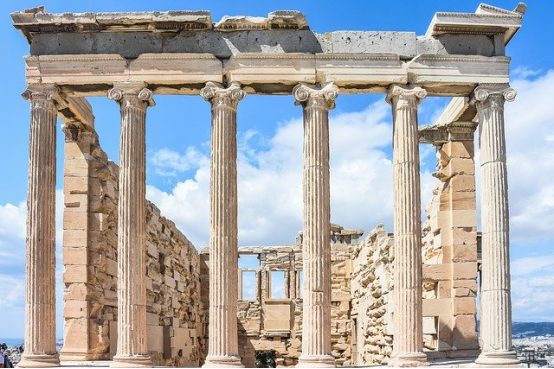
The Parthenon, one of the most famous structures of ancient Greece, boasts a 2,500-year history and sits atop the Acropolis in Athens. Built in honor of the goddess Athena, it stands as a pinnacle of classical Greek architecture, renowned for its decorative sculptures and Doric column order.
Why Was the Parthenon Built?
Over the centuries, the building’s purpose evolved dramatically. Originally constructed as a Greek temple, it was later converted into a Byzantine church, then a Roman Catholic church, and subsequently a mosque. During wartime, it even served as an ammunition depot for the Ottoman Empire. Today, this iconic Greek structure is undergoing restoration to revive its original form.
The Parthenon’s Structural Resilience: Withstanding Natural Disasters
Since its completion, the Parthenon has endured earthquakes, wars, explosions, fires, and looting. Despite severe damage from these catastrophes, it remains the focal point of Athens and ancient Greek architecture, standing as a testament to its enduring design.
Exploring the Parthenon’s Architectural Style
- The Parthenon is the largest Doric temple, though it incorporates innovative Ionic elements.
- Rectangular in shape, it rests on a foundation of 23,000 square feet (approximately 2,137 square meters), measuring 69.5 meters in length and 30.88 meters in width.
- The cella (inner sanctuary) consists of the “naos” (main shrine) and “opisthodomos” (rear chamber), spanning 29.8 meters in length and 19.2 meters in width.
- Steps lead to all four sides of the temple.
- The architectural beauty of the Parthenon lies in its 46 outer columns and 23 inner columns, each with 20 flutes. These columns are slightly inclined inward rather than perfectly vertical, creating a visual illusion of straightness.
- The roof features overlapping marble tiles.
- The structure adheres to a 4:9 ratio, mathematically aligned with the golden ratio. This proportion is evident in the height-to-width ratio of the building and the diameter-to-spacing ratio of the columns.
- It was constructed on the limestone foundation of a predecessor temple.
Decorative Sculptures in the Parthenon
The Parthenon was the first Greek temple to feature extensive sculptural decoration, with various surviving works still visible today:
Metopes
- Metopes are carved square stones placed between three grooved triglyphs. There are 92 metopes in total, adorning the exterior walls and depicting four different mythological battles:
- West Metopes: The Amazonomachy (battle between Amazons and Greeks).
- East Metopes: The Gigantomachy (battle between gods and giants).
- South Metopes: The Centauromachy (conflict between centaurs and Lapiths).
- North Metopes: The Trojan War.
Frieze
The frieze is the most celebrated decorative element of the Parthenon. It is a continuous band of intricate relief sculptures running along the entire length of the cella walls, crafted in low relief (where figures project slightly from the background).
Pediments
At both ends of the temple, the triangular pediments feature 50 circular carvings:
- East Pediment: Depicts the birth of Athena.
- West Pediment: Illustrates the contest between Athena and Poseidon for control of Attica.
The Statue of Athena Parthenos
The now-lost 12-meter-tall statue of Athena Parthenos stood in the cella. Carved from wood and clad in ivory and gold, it depicted a fully armored Athena wearing the Aegis (a goatskin shield), holding the Nike (Goddess of Victory) in her right hand and a shield in her left. The scene represented the Amazonomachy. A snake coiled behind her shield, and her helmet featured a sphinx and two griffins.
A large pool in front of the statue maintained humidity to preserve the ivory and reflected light from the entrance, enhancing its grandeur.
The Parthenon remains a masterpiece of ancient architecture, showcasing exquisite craftsmanship and sculptures that vividly narrate Greek history. Despite millennia of upheaval, it continues to symbolize the cultural and artistic legacy of Athens.
- In the Vercors Region, a Stone and Timber House Designed by Perrodin
- The Nakagin Capsule Tower: Timeless Architectural Beauty