The Ultimate Guide to Auto-Darkening Welding Helmet Technology and Eye Safety
The transition from traditional fixed-shade glass to modern Auto-Darkening Filters (ADF) represents one of the most significant leaps in industrial safety technology. For decades, welders relied on the “nodding” technique—snapping their necks to drop a heavy mask into place just as the arc struck. Today, the integration of sophisticated sensors and Liquid Crystal Display (LCD) technology has transformed the welding helmet into a high-precision optical instrument designed to protect the human eye from the intense ultraviolet (UV) and infrared (IR) radiation produced during various welding processes.
The Evolution of Welding Protection: From Manual to Automatic
The history of the welding helmet is a journey from basic physical shielding to active electronic protection. Early welders used handheld shields or simple leather hoods with dark glass inserts. These required the operator to be in total darkness before the arc was struck, leading to “arc eye” (flash burn) if the timing was off. The introduction of the first automatic light-changing helmets revolutionized the field by allowing the welder to see the workpiece clearly in a “light state” and then darkening within microseconds of arc ignition.
The “Nodding” Era vs. The ADF Revolution
The traditional nodding mask was not only a physical burden but also a source of long-term neck strain and repetitive stress injuries. Furthermore, the momentary exposure to the arc before the mask dropped—or the risk of the mask failing to stay down—posed constant threats to ocular health. Modern ADF systems eliminate these risks by utilizing high-speed shutters that react at speeds often exceeding 1/25,000th of a second. This ensures that the eyes are never exposed to the initial “flash” of the arc strike.
- Increased Productivity: Welders no longer need to stop and start to adjust their masks, allowing for continuous workflow.
- Superior Accuracy: The ability to see the electrode placement in the light state leads to more precise arc starts and higher-quality beads.
- Enhanced Safety: Constant UV/IR protection is maintained even when the helmet is in the light state, thanks to specialized coatings on the filter.
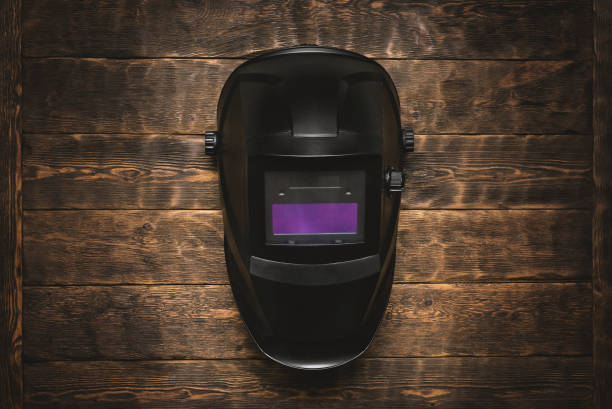
The Science of Sight: How LCD and Sensors Protect Your Eyes
At the heart of every modern welding helmet is the Auto-Darkening Filter (ADF) stack. This complex component consists of multiple layers, including a permanent UV/IR filter, several layers of liquid crystal cells, and polarizing filters. The synergy between these layers determines the optical clarity and the speed of the darkening response.
The Role of Liquid Crystal Technology
The LCD in a welding helmet does not display images; instead, it acts as a light valve. When an electric current is applied by the control circuit, the liquid crystal molecules align to block light. When the current is removed, they return to a disordered state, allowing light to pass through. This electronic “shutter” is what allows the helmet to switch between shade levels almost instantaneously.
Sensor Logic and Response Time
The sensors are the “eyes” of the helmet. They are usually photo-diode sensors that detect the specific infrared signature of a welding arc. High-end helmets utilize sophisticated circuitry to distinguish between the flickering light of an arc and the steady light of the sun or workshop lamps. Response time is a critical metric here; a professional-grade helmet typically switches in 0.1 to 0.04 milliseconds. This speed is essential for preventing the retina from being overwhelmed by the sudden intensity of the arc light.

The Geometry of Arc Capture: Why Sensor Count Matters
One of the most debated aspects of helmet design is the number of sensors. While entry-level helmets may only feature two sensors, professional models often include four or more. The reason lies in the “geometry of capture”—the ability of the helmet to “see” the arc even when the welder is working in tight spaces or around obstructions.
Avoiding the “Blind Spot”
In complex welding environments, such as pipe welding or structural assembly, the welder’s view of the arc may be partially blocked by the workpiece or their own hands. If a helmet has only two sensors and both are obstructed, the ADF will fail to darken, leading to a “flash.” By placing four sensors in a rectangular or staggered pattern, manufacturers ensure that at least one sensor always has a clear line of sight to the arc light.
| Sensor Count | Best Use Case | Reliability Level |
|---|---|---|
| 2 Sensors | General DIY, Open-bench welding | Standard |
| 3 Sensors | Light industrial, occasional out-of-position work | High |
| 4 Sensors | Heavy industrial, pipe welding, obstructed environments | Maximum |

Mastering Low Current and Pulse Welding Sensitivity
Not all welding arcs are created equal. TIG (Tungsten Inert Gas) welding, particularly at low amperages (under 5 amps), produces an arc that is significantly dimmer and more stable than MIG or Stick welding. This poses a challenge for standard sensors which may not detect the low-intensity light, causing the helmet to flicker back to the light state while the welder is still working.
TIG Welding and Ultra-Low Brightness States
For precision TIG work, a helmet must have adjustable sensitivity. This allows the welder to “tune” the sensors to recognize even the smallest arc. Furthermore, the helmet must support a stable “dark state” without flickering. Professionals often look for helmets rated for TIG down to 5 amps or less. In these scenarios, the “clear” state of the helmet (often Shade 3.0 or 3.5) is just as important as the dark state, as it allows for better visibility of the thin filler wire used in argon arc welding.
The Pulse Welding Challenge
Pulse welding involves the current rapidly switching between high and low levels to control heat input. This creates a strobing effect that can confuse lower-quality ADFs. A high-performance helmet uses advanced digital signal processing to recognize the pulse frequency and maintain a consistent dark state, preventing the “strobe effect” that can cause significant eye fatigue and headaches during long shifts.
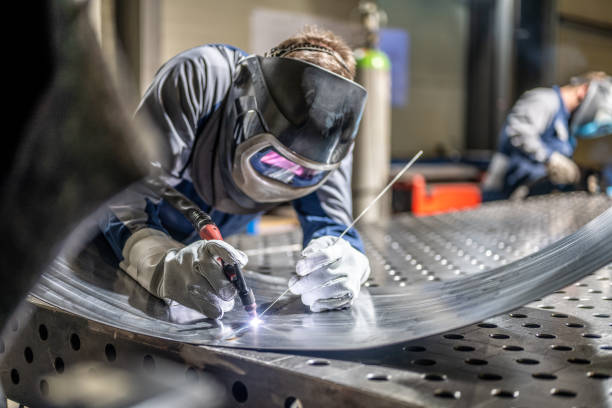
Optimizing Efficiency through Adjustable Shade Ranges
Modern helmets offer a wide range of shade levels, typically from Shade 5 to Shade 13. Understanding how to optimize these ranges is key to both safety and efficiency. If a shade is too dark, the welder cannot see the weld pool clearly, leading to defects. If it is too light, the eyes will suffer from strain and glare.
Standard Shade Recommendations
- Shade 5-8: Ideal for plasma cutting and oxy-fuel welding/cutting.
- Shade 9-10: Suitable for low-amperage MIG and TIG welding.
- Shade 11-13: Required for high-amperage Stick, MIG, and Flux-Cored welding.
Advanced helmets now feature “Auto-Shade” technology, where a sensor measures the intensity of the arc and automatically adjusts the shade level in real-time. This allows the welder to move from a low-current root pass to a high-current fill pass without ever touching the helmet controls.
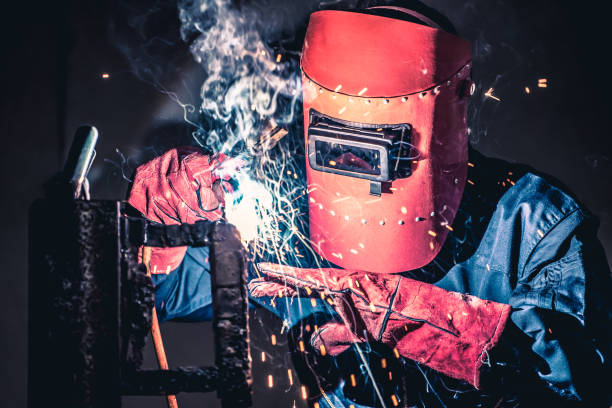
Troubleshooting Flash Dimming Failures and Maintenance
Even the best auto-darkening helmet can fail if not properly maintained. A “flash dimming failure”—where the helmet fails to darken or stays dark too long—can be frustrating and dangerous. Most issues are related to the power supply or the cleanliness of the sensors.
Common Causes of ADF Failure
- Battery Exhaustion: Most ADFs use a combination of solar cells and lithium batteries. If the battery is dead, the LCD cannot switch. Always check the low-battery indicator.
- Dirty Cover Lenses: The clear plastic lens protecting the ADF can become covered in spatter and smoke. This blocks the light from reaching the sensors. Regular replacement of cover lenses is the most effective maintenance task.
- Sensitivity Settings: If the sensitivity is set too low, the arc won’t trigger the darkening. If set too high, ambient shop lights might trigger it.
- Delay Settings: The “delay” control determines how long the helmet stays dark after the arc stops. This is crucial for high-amperage welding where the weld pool remains glowing red (and emitting IR) for a moment after the arc is extinguished.
Frequently Asked Questions (FAQ)
- Q1: Why does my helmet flicker while I am TIG welding?
- Flickering during TIG welding usually occurs because the arc current is too low for the sensors to detect consistently. To fix this, increase the “Sensitivity” setting on your helmet. If the problem persists, ensure your sensors are not obstructed and that you are using a helmet specifically rated for low-amperage TIG.
- Q2: Do auto-darkening helmets protect against UV/IR even when turned off?
- Yes. Quality auto-darkening filters have a permanent UV/IR coating. This means that even if the electronics fail or the helmet is in the “light state,” your eyes are still protected from the harmful invisible radiation. However, you will still be blinded by the visible light (the “flash”), so you should never weld with a malfunctioning ADF.
- Q3: How often should I replace the outer clear cover lens?
- The outer cover lens should be replaced as soon as it becomes pitted, scratched, or covered in enough smoke to impair your vision. In heavy industrial environments, this might be daily; for hobbyists, it might be every few months. Clearer vision reduces eye strain and improves weld quality.
- Q4: What is the difference between “1/1/1/1” optical rating and others?
- The 1/1/1/1 rating refers to the EN 379 standard for optical quality, covering Accuracy of Vision, Diffusion of Light, Variation in Luminous Transmittance, and Angle Dependency. A “1” in all four categories represents the highest possible clarity and the least amount of distortion, which is critical for professional-level work.
- Q5: Can I use an auto-darkening helmet for overhead welding?
- Yes, but you must ensure the helmet is designed for it. Overhead welding produces significant spatter that can fall directly onto the sensors and the ADF. Ensure you have a properly fitted bib and that your cover lenses are rated for high-impact and high-heat resistance.
Technical and safety note: This article is for general editorial information only. Welding, electrical, respiratory, home repair, grooming, child-safety, material-science, and building topics should be checked against current standards, manufacturer instructions, local codes, and qualified professionals before use.
- The Scientific Impact of Lighting on Human Emotions and Well-being: An Ultimate Guide
- The Ultimate Guide to Welding Helmet Power Supply Strategies: Indoor vs. Outdoor Optimization