The Ultimate Guide to Welding Helmet Power Supply Strategies: Indoor vs. Outdoor Optimization
This pillar page is synthesized from advanced industry research regarding auto-darkening filter (ADF) power management.
The Fundamentals of Auto-Darkening Power Systems
The core of modern welding protection lies in the Auto-Darkening Filter (ADF). Unlike traditional passive lenses, the ADF requires a consistent and reliable power source to drive the liquid crystal cells that react to the welding arc. Understanding the “Why” behind power selection involves analyzing the energy consumption of high-speed optical sensors and the switching circuitry.
The Role of the Lithium Battery
Lithium batteries, such as the CR2032 or CR2450, serve as the primary “kickstart” for the lens. They provide the instantaneous current required to darken the lens in less than 1/25,000th of a second. In low-light indoor environments, these batteries are the workhorse of the system, ensuring that the lens reacts even when ambient light is insufficient to trigger solar cells.
The Integration of Solar Assist Technology
Solar panels on welding helmets are rarely the sole power source. Instead, they act as a supplementary system. In outdoor environments, solar cells capture the intense UV and IR radiation from the sun and the welding arc itself, offloading the energy demand from the internal batteries and significantly extending their operational lifespan.

Indoor vs. Outdoor: Strategic Power Selection
The environment in which you weld dictates the stress placed on your helmet’s power management system. Professional welders must differentiate between the steady, controlled lighting of a fabrication shop and the high-intensity, variable light of an outdoor construction site.
Challenges of Indoor Welding
Indoor welding often involves artificial lighting (fluorescent or LED) which does not provide the same spectrum of energy as natural sunlight. In these scenarios, a helmet with “Replaceable Battery Only” or “Hybrid with High Sensitivity” is preferred. The lack of natural UV means the solar assist is less effective, making battery health the primary concern for safety.
Maximizing Efficiency in Outdoor Welding
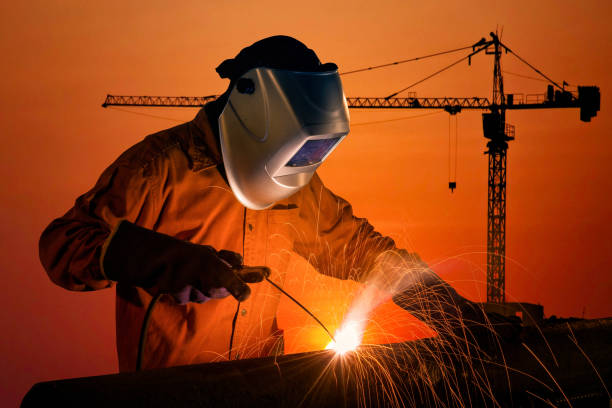
Outdoor welding provides an abundance of solar energy, but it introduces the risk of “false triggering” where the sun causes the lens to darken prematurely. Advanced helmets designed for outdoor use feature specialized sensors that can distinguish between the flickering pulse of a welding arc and the steady light of the sun, often relying more heavily on solar power to maintain the dark state during long duty cycles.
Technical Comparison of Powering Methods
Choosing the right power configuration involves balancing maintenance needs with operational reliability. Below is a technical breakdown of the most common power supply strategies used in the industry today.
| Power Strategy | Best Environment | Pros | Cons |
|---|---|---|---|
| Fixed Internal Battery | Intermittent Use | Low maintenance, compact design | Entire helmet is useless once battery dies |
| Replaceable Battery | Professional Shops | Infinite lifespan, easy to troubleshoot | Requires carrying spare batteries |
| Solar Assist Hybrid | Outdoor/High Volume | Extended battery life, eco-friendly | Requires light to maintain peak efficiency |
| USB Rechargeable | Modern Facilities | No waste, consistent power delivery | Requires downtime for charging |
Expert Advice: The Low-Battery Indicator
Always prioritize helmets equipped with a physical low-battery warning light. In a pillar-page level analysis of safety, a helmet that fails to darken because of a dead battery is the leading cause of “arc eye” or flash burns. A visual indicator ensures you are never caught off guard mid-weld.
Optimizing Battery Life and Performance
To ensure your power supply strategy remains effective, regular maintenance protocols must be followed. This is especially true for hybrid systems that rely on the synergy between the battery and the solar panel.
- Clean the Solar Panel: Dust and grinding spray can block UV rays, forcing the battery to do all the work.
- Storage Matters: Store solar-assisted helmets in a well-lit area (not a dark locker) to keep the internal capacitors conditioned.
- Cold Weather Check: Lithium batteries lose voltage in freezing temperatures; keep your helmet in a climate-controlled area during winter months.
Frequently Asked Questions (FAQ)
- Can a solar welding helmet work without a battery?
- Most modern “solar” helmets actually use a hybrid system. While some very basic models can run on solar energy alone once the arc is struck, they almost always require an internal battery or capacitor to initiate the first millisecond of darkening.
- How long do replaceable batteries typically last?
- In a professional setting, CR2032 or CR2450 batteries typically last between 2,000 and 3,000 hours of active welding time. However, shelf life and ambient temperature can reduce this significantly.
- Why does my helmet flicker when welding outdoors?
- Flickering is often caused by the sensors being confused by sunlight or the solar panel being partially obstructed. Adjusting the “Sensitivity” and “Delay” settings on your helmet can usually resolve this issue in outdoor environments.
- Is a rechargeable USB helmet better than a battery-powered one?
- USB rechargeable helmets are excellent for high-volume indoor work where charging ports are accessible. However, for field work or remote outdoor sites, replaceable batteries are often superior because they can be swapped instantly without waiting for a charge.
- What happens if the power fails while I am welding?
- High-quality helmets are designed to fail in a “safe” state. Even if the power fails, the lens usually provides permanent protection against UV and IR radiation, though the visible light will become painfully bright (the “shade 3 or 4” state).
Technical and safety note: This article is for general editorial information only. Welding, electrical, respiratory, home repair, grooming, child-safety, material-science, and building topics should be checked against current standards, manufacturer instructions, local codes, and qualified professionals before use.
- The Ultimate Guide to Auto-Darkening Welding Helmet Technology and Eye Safety
- Complete UV & IR Protection Guide for Welding Professionals